



Fragmentation, Clearing, and the Future of Repo Markets

Neil Taylor, product design, and Peter Altero, chief business development officer, speak with Karl Loomes about fragmentation risk, margin efficiency, and the role of post-trade infrastructure as clearing expands in the US Treasury and repo markets

As more CCPs enter US Treasury clearing, is liquidity at risk of becoming fragmented — and what does that mean in practice for repo markets?

Neil Taylor: As new clearing houses enter the US Treasury (UST) clearing space, one implication is that firms may have to post margin across multiple central counterparties (CCPs) without being able to net transactions, which creates what is commonly referred to as collateral drag.

That links to what is more widely known as the CCP basis, where premiums can emerge for certain transactions or CCPs depending on netting obligations or cross-margining capabilities. Fragmentation could therefore increase capital costs for organisations because positions cannot be cross-netted across CCPs.

Peter Altero: We have seen similar fragmentation play out in other asset classes. Often, the price to clear and the cost to clear are not immediately visible. Early on, pricing between bilateral and cleared trades may appear consistent, but over time a basis can develop.

If you look back at the swaps market, there was even a basis between different clearing houses which shifted buy side market share over a period of time. I am not saying this will happen in the UST market, but it is one to watch over time post mandate. What is interesting is which other CCPs might get involved. As more products become centrally cleared, firms will likely expand their requirements of the global CCPs to support broader product coverage, or will push for inter CCP partnerships to assist clients in recognising cross-margining benefits.

 

Can post-trade technology genuinely prevent repo markets from becoming siloed as clearing options multiply, or is some fragmentation inevitable?

Altero: In short, yes, but the starting point for the UST market is different to what I’ve observed in other asset classes. In swaps for instance, there was already a push to electronically confirm transactions in the early 2000s which created a central authoritative data record, eliminating silos and fragmentation.

As regulators rolled out sweeping changes to the swaps market and introduced a clearing mandate, it was accompanied by a trading mandate which centralised liquidity on swap execution facilities (SEFs) and multilateral trading facilities (MTFs) and drove the majority of dealer-to-client voice transactions onto electronic venues. Technology played a pivotal role in helping customers comply with regulation, simultaneously linking a wider market segment that included their execution venues, clearing houses, and counterparties. This allowed clients to decide where to execute and clear based on pricing and liquidity, rather than technology constraints.

In repo, the objective is similar. Firms should be able to process trades in a familiar way, receive consistent messages into their risk systems, and then clear at the CCP that best suits their business. Evolution in post-trade technology is imperative to ensure a smooth transition and will also help firms drive standardisation in their workflows, especially as new clearing models, and CCPs are adopted.

Taylor: Standardisation is the critical component. When you have standardisation and a central point for transactions, many of the fragmentation issues firms experience — or may experience in the future — can be significantly reduced.

What role can portfolio optimisation, netting, or compression play in offsetting higher margin costs across multiple clearing venues?

Taylor: They will play an important role. Historically, these services have not been widely used in repo, however we have seen how effective these services have been in other asset classes through OSTTRA triBalance and triReduce, and there is an opportunity to introduce similar concepts into repo.

Extensive participation in the evolution of the trading landscape in other asset classes has demonstrated our ability to help clients optimise their exposures within, and across, separate trading venues. This will allow clients and end users to retain flexibility on their choice of clearing venues. We are already developing the extension of our existing services with clients to enable more efficient use of their own financial resources (margin, balance sheet, and liquidity) in cleared and uncleared repo.

Altero: Over my 18 years in the industry, optimisation and compression have evolved significantly. Early on, when trading was largely bilateral, the primary objective was balance sheet relief. As markets moved towards clearing, optimisation providers became more important.

A common CCP and increased portfolio fungibility allowed providers to enhance their offerings and deliver better outcomes. If repo follows a similar trajectory, optimisation will grow in importance, but it needs time. Clearing is the first hurdle. The next phase — product evolution — will be the most interesting.

 

Repo has traditionally been flexible and relationship-driven. Is increased clearing pushing the market toward over-standardisation?

Altero: I do not think so. Firms will still be able to achieve the trade outcomes they want. There may be pressure, particularly from the buy side, to trade more vanilla products in order to access clearing benefits.

That said, repo is a deep and liquid market, and relationships still matter. If firms want to trade bespoke transactions bilaterally, they will continue to do so. Any move toward standardisation will be driven by the industry itself.

Taylor: CCPs will also evolve, offering a broader range of transaction types — such as open or evergreen repo — so that more trades can be cleared. There will always be a balance between flexibility and balance sheet relief, and CCPs will adapt because demand for flexibility remains.

OSTTRA often refers to the idea of a ‘golden trade record’. How close are firms to having a single, reliable view of their global repo positions?

Altero: I would say the industry is still not there yet, but the concept is well understood. Repo post-trade processing remains highly inefficient. Firms rely on multiple point-to-point data sources — e-mails, chats, CSV and reports from execution venues, CCPs, Prime Brokers, and futures commission merchants (FCMs) — and then stitch together multiple data formats simply to understand their position.

A central authoritative trade record in repo which is kept up to date when lifecycle events such as re rates and allocations take place, would eliminate much of the operational risk and complexity of supporting this market and its evolution.

The next step is extending that record into settlement — enabling cash flow matching, independent marks, and greater lifecycle automation to reduce settlement friction.

Taylor: Repo appears simple on the surface, but it is operationally complex, with many lifecycle touchpoints. Missed re-rates or incorrect interest calculations as an example can quickly lead to settlement failures. A central golden record removes many of those issues. It works in rates and derivatives, and there is no reason it cannot work in repo.


With T+1 now live in cash markets, how well positioned is the repo market — and is near real-time affirmation becoming essential?

Altero: It is less about mandatory affirmation and more about flexibility. Electronic trades may already be matched, but the real opportunity lies in standardised data, lifecycle automation, and settlement workflows — including predictive analytics, cash flow matching, portfolio reconciliation, and exception management to catch settlement breaks in advance of settlement date. That is how firms move closer to effective T+1 compliance and avoid potential fail penalties. Central data and affirmation workflows is a model to achieve this, but it is not the only answer.

If you could change one aspect of the global post-trade infrastructure to improve repo clearing efficiency, what would it be?

Altero: Standardisation and centralisation. If the repo market already consisted of centralised authoritative data a shift into clearing would be far easier. The market remains fragmented, and firms ultimately need to decide how much they want to invest their technology budgets as they approach regulatory changes in this market.

From a vendor perspective, that means partnering with existing platforms and acting as connective tissue across the ecosystem. We are encouraged by the constructive feedback from our key clients, which is helping us sharpen our focus on these industry partnerships.

Taylor: Post-trade repo remains under-invested in. Firms should look at what has worked in rates and credit derivatives and apply those lessons. Both cleared and non-cleared repo will remain significant, so solutions need to work across both.


This article was originally published by Securities Finance Times.

Navigating the Final Countdown to US Treasury Clearing: A Unified Path to Compliance

With the first SEC mandate deadline now less than a year away (December 31, 2026), the industry has moved into a critical phase of operational execution. For market participants, the priority has transitioned from high-level scoping to the practical implementation of “Done-Away” clearing workflows.

To meet this challenge, OSTTRA is providing a gateway to mandated clearing. Rather than addressing these changes in silos, we are mobilising our established clearing expertise across two core pillars – limit management and lifecycle orchestration. This end-to-end approach helps firms maintain high-speed risk checks while establishing a robust, transparent workflow for submission into clearing.

1. Certainty of Acceptance: Real-Time Risk Validation

The move to an agency model introduces a critical bottleneck: the need for near-instant credit validation before a trade is accepted for clearing. OSTTRA facilitates this through LimitHub, a high-performance risk engine that bridges the gap between execution and the clearing member.

Following the successful rollout of our Repo and Cash UAT environments, we are working with firms to achieve certainty of clearing member acceptance. By validating trades against limits in real-time controlled by FCMs (Futures Commission Merchants) and ACMs (Agent Clearing Members), we provide several key performance and connectivity advantages:

2. Operational Resilience: Standardising the Repo Lifecycle

Beyond the point of execution, the complexity of matching and affirmation requires a standardised middleware layer. OSTTRA MarkitWire serves as this orchestration layer, leveraging the same architecture that has underpinned the OTC derivatives market for over two decades.

Furthermore, OSTTRA Trade Manager offers seamless native integration with OSTTRA MarkitWire, providing  the investment management community with a consolidated view of their trading activity across multiple asset classes and workflows.

By centralising the post-trade workflow, we offer a definitive, transparent workflow for every trade, encompassing:

A Collaborative Path to Your Compliance

As the 2026 and 2027 deadlines approach, the window for testing and implementation is narrowing. At OSTTRA, we believe that industry readiness is a collective effort. We are currently leading active working groups with a broad range of FCMs/ACMs and Trading Venues to ensure our integrated platform aligns with the evolving needs of the US Treasury market.

Get Involved: We invite you to join our ongoing industry working groups or begin your own transition within our UST-ready UAT environment.

Contact our Treasury Clearing Experts to map your path to your compliance.

We acknowledge the industry’s concerns regarding scalability, profitability, and technology investment. We are working closely with market participants to develop solutions that address these challenges.

As the industry prepares for these regulatory changes, OSTTRA is committed to providing adaptable and efficient solutions.

This page will be updated as regulatory developments and industry needs evolve.

We encourage you to contact us to discuss your specific requirements and how we can help you navigate the evolving landscape of US Treasury clearing. For more information, please complete the form below.

OSTTRA to Launch Ground Breaking Repo Confirmations Service, Powered by MarkitWire

NEW YORK, LONDON, 17 May 2022 – OSTTRA, the global post-trade solutions company, today announced the launch of OSTTRA Trade Processing for Repos powered by MarkitWire, the leading electronic trade confirmation and processing platform. The service is expected to be live in Q3 2022 and testing is underway with more than 10 firms, including global banks, brokers and investment managers.

OSTTRA Trade Processing for Repos will bring new efficiencies to the Repo market, which has lagged behind the post-trade automation achieved in other asset classes. The new service will establish a set of industry standard electronic workflows for Repo trade confirmation and life-cycle event management, built on MarkitWire’s extensive global network. By creating a legally confirmed record, updated through the trade lifecycle, the service will help meet growing regulatory demands to increase settlement efficiency, minimising the need for reconciliation, and reducing trade confirmation processing times from days to minutes.

With the Interest Rate and Repo markets coming closer together as a result of the transition to risk free rates, OSTTRA is harmonising the post-trade processing of both asset classes by bringing them together on MarkitWire, the global platform for confirmation and processing of Interest Rate Derivatives.

OSTTRA was formed in 2021 through the combination of MarkitServ, Traiana, TriOptima and Reset, four businesses that have been at the heart of post-trade evolution and innovation for more than 20 years.  The launch of the new Repo service reflects OSTTRA’s ongoing commitment to build upon its global network and expertise to streamline post-trade workflows across a broader range of asset classes.

Peter Altero Jr, Head of Rates Business Development at OSTTRA said: “The introduction of new regulatory mandates has focussed our customers’ attention on Repo post-trade workflows, which have been slow to evolve. Following broad engagement via our industry working groups, we’re leveraging our established MarkitWire platform and global community of 2,000+ firms to transform the Repo post-trade lifecycle, delivering a real reduction in cost and risk.”

Matthew Woodhams, Head of eCommerce at Tradition, added: “Given the trajectory towards post-trade electronification and automation, coupled with the volatility present in securities lending markets, we expect OSTTRA Trade Processing for Repos to bring significant efficiencies to our Repo operations, creating a strong business case for greater involvement in these markets.”

To find out more about our Repo Confirmation service, click here.

From Faxes to Fintech: OSTTRA MarkitWire – Reflecting on 20+ years of industry evolution

The financial markets have undergone a dramatic transformation in the past two decades, and OSTTRA MarkitWire has been at the forefront of this evolution. From its origins replacing fax-based confirmations to its current role as a leading fintech platform, OSTTRA MarkitWire has helped shape the post-trade landscape and actively participated in the evolution.

Momentous change in financial markets

Looking back, the sheer magnitude of change is striking. Gone are the days of cumbersome manual processes, when boxes of derivative confirmations were couriered to counterparties to agree trades, or trade records were faxed over archaic technologies. Today’s seamless electronic post-trade processes have come a long way, driven in part by new technology but also by market events. And while not all those events have been anticipated or welcome, the challenges they presented have spurred innovation and ultimately benefited the entire industry. The ramifications of the global financial crisis have shaped much of today’s over-the-counter (or OTC) derivative trade workflows. Legislation has been passed and successfully rolled out across market jurisdictions.

Reflecting on the past twenty years, we feel it’s essential to pause and appreciate the industry’s remarkable evolution and accomplishments, and the role OSTTRA MarkitWire has played. But the journey doesn’t end here. OSTTRA remains committed to partnering with clients to navigate the challenges and opportunities that lie ahead. Synergies across the OSTTRA business mean clients will have single streamlined workflows across large data sets; a marked difference to a past world of siloed interactions.

20 years of evolution

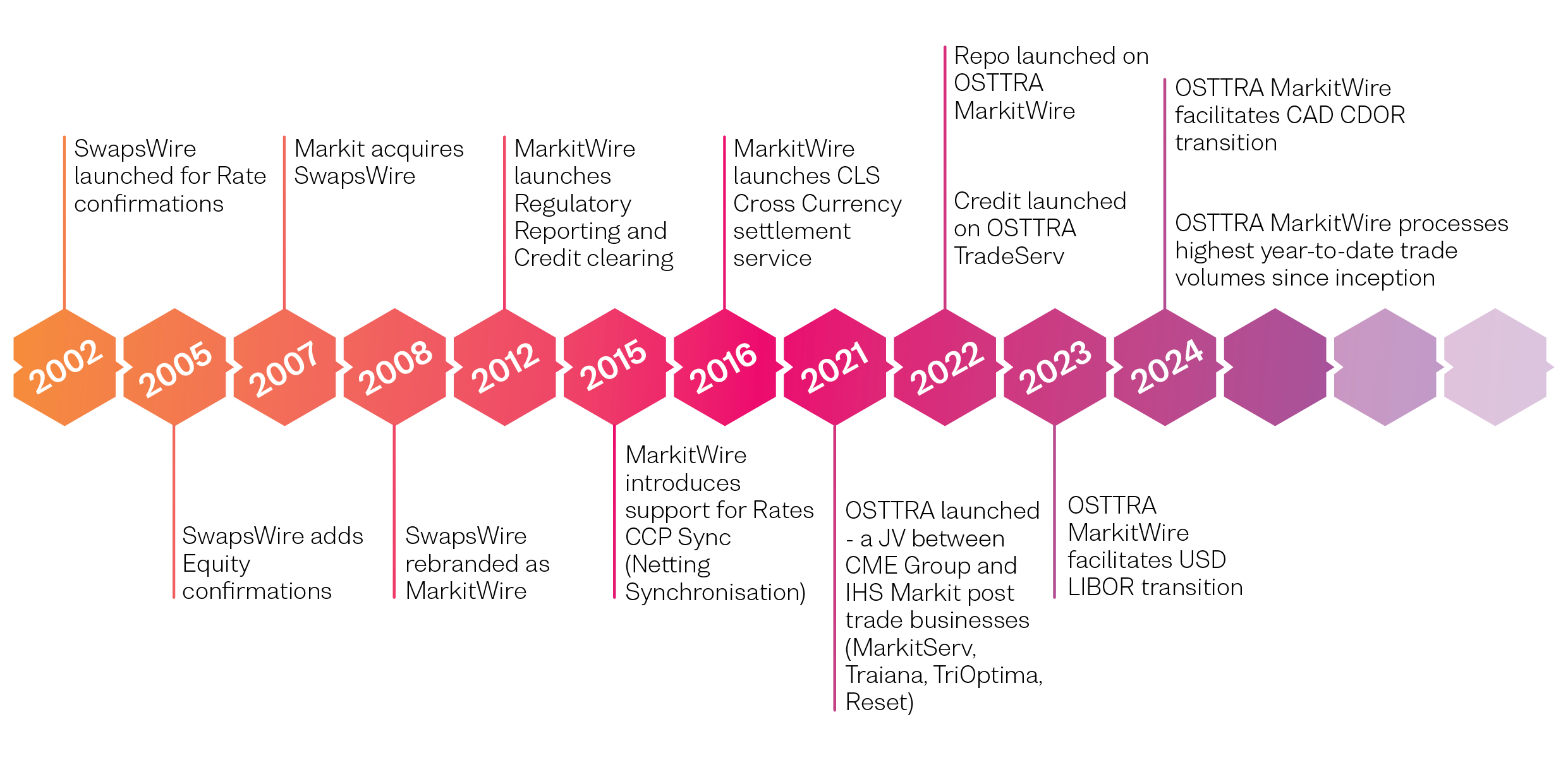
The story of post-trade processing is a journey of evolution, driven by technology vendors but guided by financial institutions. In the early days of SwapsWire, the original name for OSTTRA MarkitWire, the focus was on building a platform that could connect counterparties for electronic trade confirmation in the interest rate derivatives market and then quickly progressed to support clearing. This marked a significant step forward from the manual processes that dominated the industry.

Since then, the service has evolved into a comprehensive platform driven by straight-through processing (STP), significantly reducing operational risk by minimising human intervention. Today it comfortably processes tens of millions of trade records yearly, supporting rates, credit, equity, and repo transactions across 34 currencies and various product sub-types, with connectivity to 12 CCPs and multiple venues supporting 8 venue types. Building on this success, OSTTRA MarkitWire is transforming the bilateral repo market with our standardised, automated affirmation and confirmation workflows, while working with our customers to prepare for the incoming clearing mandates in the United States.
Furthermore, OSTTRA Trade Manager interacts seamlessly with OSTTRA MarkitWire providing investment managers and fund administrators with a consolidated matching and confirmation workflow across asset classes.

OSTTRA MarkitWire has a proven track record of supporting the industry through periods of significant change and uncertainty. When the Lehman Brothers crisis emerged in 2008, we worked with our clients and clearing houses to assist in an orderly transition of portfolios. The partnership has continued through the rollout of clearing best practices and mandates worldwide with OSTTRA MarkitWire connectivity extended to relevant CCPs, not only for clearing but also for post-clearing events, including the cleared trade IBOR transitions. The service now includes CLS settlement and connectivity to trade repositories for regulatory reporting.

In this era of complex and intense regulatory debate, OSTTRA has remained a steadfast partner, providing clients and partners with automated, digitised solutions, helping to manage the cost and complexity of change.


Consensus building – the keystone for centralised adoption

One of the most important roles a scaled technology provider can play is to act as a forum for rational industry-wide decision making. The industry expresses its mutual needs, and we provide intelligence, expertise and insight on how workflows can evolve to satisfy new regulations efficiently.

Market participants can struggle to collaborate and find cost-effective solutions to benefit the industry without setting off legal alarm bells. We have provided a safe forum for discussion since the initial launch with a member group of 23 businesses interested in standardising inter-dealer messaging in the rates market. Today we engage with a network of over 1,600 active participants across multiple working groups and the network continues to grow, particularly in emerging markets where the demand for market infrastructure increases.

With our partners we have taken the industry on a journey, drawing on new technologies and techniques as they have become available. That journey is not stopping now; on the contrary, OSTTRA marks a shift into a new gear, with the promise of compelling and synchronised benefits to our customers.

Marrying ‘T0’ and ‘T+’ post-trade processes

As OSTTRA, we have aligned our services to enable frictionless workflow for confirmation and reconciliation processes. Our full legal confirmation remains the key cog in our credit, rates and equity businesses – providing a golden source of agreed electronic derivative contract information to market counterparties, and creating a point of agreement and standardisation that enables trust.

Using this record in downstream T+1 activities lowers the resource burden for operational teams managing increasing volumes and system complexities. In today’s environment of ever-increasing regulatory scrutiny, banks must conduct assorted reconciliations across their technology infrastructures to ensure data accuracy and compliance. This includes reconciling data between their own global business units, between counterparties, with clearing houses and also the data they report to trade repositories.

Given OSTTRA’s interconnected post-trade services and 20 year track record, we are uniquely positioned to assist the industry in navigating these processes. This is our bread and butter. Increasing STP, harnessing the power of data, enabling synchronised analytical processes and allowing customers to optimise their resources most appropriately aligns with our vision and track record of marrying post-trade processes for the benefit of the industry.

In delivering for our clients i.e., by connecting OSTTRA MarkitWire and our portfolio reconciliation service, OSTTRA triResolve, we endeavour to add further use cases that bridge the synergies within OSTTRA. Future cases will span different asset classes and platforms, amplifying the resource optimisation benefits our customers are continually searching for and removing redundant processes for good.

Partnering with the industry through Interest Rates reform and transition

Financial market professionals will be well-versed with the global introduction of overnight risk-free rates (RFRs), replacing legacy interbank offered rates (IBORs), across multiple markets and currencies. For over 20 years the legacy OSTTRA businesses have helped navigate industry change like central clearing, regulatory reporting, compliance timeliness, and disclosure of material economic terms (METs). Benchmark reform is no different.

OSTTRA MarkitWire’s CCP Sync services for Rates initially focused on netting, compression, and portfolio transfers. By listening to multiple CCP updates and absorbing trade messages back into customer systems via existing APIs, we enabled advantageous STP workflow and mitigated the need for customers to build additional post-trade connectivity. As clearing continues to evolve across various jurisdictions, this connectivity remains as important as ever.

Enter benchmark reform through clearing events – the process of running high-risk, multi-year projects of transitioning millions of trades from IBOR rates to new RFRs. Using our CCP Sync service, hundreds of customers have avoided expensive ‘blue ocean’ builds and instead utilised the OSTTRA MarkitWire connectivity to multiple CCPs and coverage of key market currencies, to achieve transitions in an automated manner. We partnered with the industry through the initial IBOR transitions in 2021 and the notable USD Libor transition events in 2023 – the work continues today.

As various markets and regulators continue to review and update legacy rates – most recently Canada, and looking ahead to Mexico, Japan and Israel – rest assured the OSTTRA team is on-hand to deliver exceptional CCP Sync services that reduce cost and risk through low latency and resilient frameworks. We have no doubt legacy rates will remain in certain markets, and that’s OK; our aim is to partner with the industry across their broader portfolios of trades, be they cleared or non-cleared, and when the time is right, we’ll be there to support rates transition activity.


It’s not about the destination, it’s about our journey together

So the question is, where does the industry go from here? With a backdrop of exciting new technologies such as distributed ledger and artificial intelligence (AI), our experts are naturally following these developments and applying innovative and incremental changes to our products, for example, OSTTRA Trade Manager’s Paper Digitisation module. We view these changes as natural improvements to the existing products that have served the industry so well.

Most importantly, we look to our clients to shape our functionality roadmap. Their input may be driven by technology, the pursuit of greater operational efficiency, or challenges arising from new ideas or regulatory and compliance needs. Whatever the use case, we are committed to working collaboratively with the industry. We are not in the business of advocating shiny new technologies for their own sake, our philosophy is to advance the needs of the industry, building on 20 years of connectivity, evolution, resilience, partnership and transparency.

Two decades of experience have prepared us for the next chapter of post-trade. We’re embracing the challenge and the technology, collaborating with our clients to build a future defined by efficiency, innovation, and connectivity. The future is post-trade, and it starts now.

For more information, contact info@osttra.com

Post-trade Processing: The Next Horizon

In the second of a two-part series, Michael Wilshere, Commercial Head of FX and Rates Trade Processing at OSTTRA, discusses the changing shape of post-trade and how market demand is shaping future innovation on OSTTRA MarkitWire and beyond

Like many parts of the financial services ecosystem, the early mechanics of post-trade were characterised by siloed services, manual processes and clunky technology. Faxed trade records and couriered derivatives confirmations were commonplace. Today, however, the post-trade landscape looks very different, driven by the push and pull of regulatory change and client demand.

OSTTRA has played a key role in driving transformation and helping firms adapt. Its offerings span multiple asset classes and steps in the post-trade lifecycle – from trade capture and confirmation, through portfolio reconciliation and margin management, to risk and capital optimisation. At the heart of the firm’s network is the OSTTRA MarkitWire trade processing platform, which has been evolving continuously for more than 25 years to streamline and automate rates and equity derivatives trade workflows.

Michael Wilshere outlines some of the key innovations that are shaping the future of post-trade processing.


As a starting point, could you outline some of the key trends you’re seeing in the over-the-counter (OTC) derivatives space today, and where you’re seeing growth in demand for post-trade services?

If we look at the more established markets, customers in the UK, Europe and the US are still balancing regulatory compliance with the drive for frictionless trade, especially given current market volatility arising from elections, macroeconomics and trade policies. They’re looking to providers like us to resolve breaks, disputes or connectivity issues.

We’re addressing this by introducing functionality in the cleared and non-cleared spaces. For example, packaged trade functionality in clearing ensures all trade legs are processed (cleared or rejected) simultaneously. And, in the non-cleared space, we are focusing on matching accuracies, such as where breaks occur in date conventions or where there are different accounting conventions on the trade.

In emerging markets, we’re seeing different trends. Clients there are looking to move into the centralised networks we provide to benefit from our products, workflows and functionality. Additionally, they require nuanced local market solutions, such as moving their paper workflows to electronic templates. We’ve introduced currency support in the Middle East – Saudi Arabia and the United Arab Emirates – and, this year, we’re working with customers in Latin America to introduce inflation-based swaps in Chile. Advocating for the move from manual to electronic processes remains a key theme for this segment.

More broadly, we’re partnering with upstream venues, downstream clearing houses and regulatory jurisdictions to ensure customers benefit from efficient end-to-end workflows.


From the Basel Committee on Banking Supervision reform to the interbank offered rate (IBOR) transition, regulatory change has played a key factor in the evolution of post-trade services. Which initiatives do you expect to exert the greatest influence over post-trade requirements in the next five years?

The IBOR transition and Basel benchmark reform have driven much of the activity over the past six or seven years. This has brought new risk-free rates into the post-trade landscape, impacting bilateral matching, confirmations and cleared workflows. OSTTRA MarkitWire plays a crucial role by integrating updates from central clearing parties during these transitions and seamlessly feeding new trades to customer risk
systems.

That activity peaked in 2023 with the US dollar Libor migration to the secured overnight financing rate (SOFR), but the momentum continued last year with Canada’s migration to the new Canadian overnight repo rate average (CORRA), as well as Mexico’s switch to the TIIE de Fondeo rate.

These reforms are progressing in established and newer markets, with ongoing medium-term activity. This year, for instance, we have had clearing house activity and transition events in Israel, and there is active interest from local markets such as Denmark, the Czech Republic and South Africa. Over the past five years, OSTTRA has facilitated the move to risk-free rates in around 15 markets, while OSTTRA MarkitWire supports more than 30 currencies and regional markets. There’s a runway for further activity, helping clients with those transitions.

One other item worth highlighting – which has driven a lot of activity in the past 12 months – is enhancing transparency around regulatory reporting. In the first half of 2024, we assisted customers with supporting unique product identifier processing for regulatory reporting, particularly in North America for the Commodity Futures Trading Commission and Canada.

Subsequently, we supported numerous customers with regulatory rewrites, adding new fields and tags for European reporting – the UK Financial Conduct Authority and the European Securities and Markets Authority. And, in late 2024, Asian authorities – the Australian Securities and Investments Commission, as well as the Monetary Authority of Singapore. Again, that will continue in the short and medium term.

Even now, this focus on reporting clarity continues, with current work including updates to Canadian regulatory reporting requirements for several swap execution facilities.


What are the main challenges facing market participants in the current environment? And how has OSTTRA MarkitWire evolved to meet client needs in these areas?

Starting with the bilateral cross-currency space, we’ve certainly seen a lot of customers looking to move the matching and confirmations workflow closer to the settlement cycles. This is primarily driven by tighter settlement timing thresholds, the T+1 initiative and updates to the FX Global Code of Conduct. Our cross-currency connectivity service, which extends to settlement agencies and banks, has been expanding to meet this demand, and we’ve seen that underlying network grow significantly in recent years. The challenge is to bring matching and confirmations closer and more aligned with settlement, streamlining two workflows into one.

Beyond cross-currency swaps, swaptions are presenting increasing use cases. These are complicated products that can take some time to process. We’re introducing enhanced functionality and are working closely with leading investment firms and trading venues. The goal is to connect historically confirmed or matched options and provide this information back to the venue when these firms execute new transactions. Viewing these trades enables firms to flatten existing risk or strategically create new risk.

On the clearing side, there’s a strong emphasis on finding the best clearing models for the US Treasuries market, despite the extended deadline for clearing cross repo and cash instruments.

From OSTTRA’s standpoint, while it is not for us to dictate what types of models are adopted, we do want to provide valuable insights and awareness to customers as they transition to these new clearing workflows. This approach is informed by our experience assisting numerous market participants with the OTC swap clearing implementation under the Dodd-Frank Act approximately a decade ago.

We’re achieving this through contributions to industry working groups, speaking to trading venues, clearing brokers, clearing houses, and so on. In terms of solutions, our credit limit check service – OSTTRA LimitHub, already used by clients for interest rate and credit default swaps – offers significant potential value for the treasury clearing space.


“There’s a strong emphasis on finding the best clearing models for the US Treasuries market, despite the extended deadline for clearing cross repo and cash instruments.”

– Michael Wilshere, OSTTRA


A previous Risk.net article, From faxes to fintech, mentioned OSTTRA’s desire to collaborate with clients to build a future defined by “efficiency, innovation and connectivity”. Can you provide examples of where OSTTRA is delivering on this ambition?

Considering the volume of rates workflow that is cleared, we’re very much focused on our clearing network when it comes to connectivity, so I’ll start there.

Currently, we have connections to 12 central clearing counterparties, and we’re looking to enhance that through packaged clearing, which is being rolled out in conjunction with industry partners.

We’re also speaking to newer clearing houses to bring them into the network, giving clients more optionality. We signed a memorandum of understanding a few months ago with Muqassa in Saudi Arabia – our first clearing house in the Middle East – offering access and workflow solutions across emerging markets.

Further downstream, within our lifecycle events, we have a reconciliation tool called OSTTRA triResolve. When customers look at reconciliations, they are always referring back to the principal trade confirmation or trade match. That’s available through our trade processing services, within rates, on OSTTRA MarkitWire, so we have connected the reconciliation process to the platform. We’ve completed this with more than 150 customers – there’s a lot of demand – and we’ll continue to look for ways to make post-trade markets more efficient.


Post-trade services are sometimes viewed as an unavoidable cost to the bottom line. How can firms maximise value from their investments in this area?

I’d agree, but there are examples where I think we are providing a new narrative. A prime example is OSTTRA’s initiative in uncleared portfolio optimisation, specifically concerning FX processing and cross-currency swaps. Here, we’re leveraging multiple products within OSTTRA by connecting OSTTRA MarkitWire to downstream services for mark-to-market valuations and settlement processes. We’re taking clients on a journey from a ‘collateralised to market’ methodology to a more advanced ‘settled to market’ one. This approach will significantly enhance counterparty risk mitigation but will also help eliminate ‘in transit’ collateral costs. Work is under way to help define the mechanics, the rule book and the first set of client use cases.

Overall, this is an example of where we are introducing a new workflow and maximising value within the trade lifecycle, rather than it being an ‘unavoidable cost’. The journey effectively mimics some of the margin efficiencies typically seen at clearing houses but, critically, these benefits are achieved within the non-cleared space.


Huge volumes of data are processed across OSTTRA’s platforms and network. To what extent can participants access this information to support superior decision-making?

One of the more established offerings is the Material Economic Terms service. This provides US swaps dealers with files detailing the economic terms of a trade, which they are required to disclose to their counterparties. OSTTRA MarkitWire manages the template and legal confirmation, which we feed back via swap-dealer systems and their own websites, ensuring dealers meet these transparency obligations.

We also offer a compliance service that delivers crucial timing data across the lifecycle of a trade, covering stages such as when a trade is submitted, matched and sent for clearing. Customers can see their ‘bottlenecks’ or ‘delinquent’ trades compared with timing standards and thresholds introduced by US and European Union regulations – effectively, 10 minutes to process certain types of trades and 10 seconds for electronic trades.

One of our newer initiatives is the Operational Metrics service. Using the OSTTRA MarkitWire self-service tool, clients have access to in-depth data and analytics on their trades. The clients can see, for instance, how timely and efficient they were in processing swaption trades or linear and non-linear transactions. Clients are then able to drill down into different currency types, counterparties and products. The service is  currently available across rates, credit and equity products across OSTTRA MarkitWire and TradeServ platforms.

A particularly valuable aspect of the Operational Metrics service is that, because we’re centralised and have a broad range of market players using the system, we can provide anonymised benchmarking against different peer groups. This directly addresses a common question we hear in customer discussions: how are we performing relative to our peers? The service provides users with this insight and flexibility, so a tier one bank can see how timely it is compared with the other Group of 14 banks, and whether it’s trending up or down.


What opportunities do artificial intelligence and other advanced technologies present for improvements in post-trade processes? Where are we likely to see the greatest benefit?

While we’re actively exploring use cases for different types of AI, we’ve already implemented impactful solutions using machine learning AI that are delivering tangible benefits today. A good example is our paper digitisation module within OSTTRA Trade Manager, which digitises PDF confirmations and enables customers to match the digitised version of the trades to their submission. We use machine learning AI to parse the economic fields of the paper confirmation and create a digital record of the trade, which is then automatically matched against the client’s submission.

It’s a product that is growing, both in terms of customer adoption and the extensive range of products supported. It currently supports more than 20 products across equities, commodities, credit and FX. Looking ahead, beyond this digitisation of the core economic terms, we’re seeing clients request additional use cases: for example, comparing legal language clauses through the lifecycle of the document. We believe there’s a considerable runway for this technological offering and are very enthusiastic about its future development.


What are your hopes and fears for the future of post-trade?

We highly value our excellent customer engagement, fostered through working groups, catch-ups and meetings, and are committed to maintaining this high level of dialogue. We want to hear about new use cases and where we can genuinely help our customers, all while maintaining their trust established through OSTTRA MarkitWire.

To provide an idea, last year we processed around $1.5 quadrillion in notional value, so there’s a lot of trust, history and good faith built up there. Our hope is to keep working closely with customers, continue delivering by building better functionality, making our systems more resilient and performant, and taking smart, incremental strides forward with the broader market.

Regarding fears, the inherent industry risks could lead some clients to consider fragmenting their workflows, perhaps for short-term gains or other motivations. However, we strongly encourage clients to recognise the enduring value of the broader network – particularly the robust, centralised and standardised nature of swaps – which has proven resilient through all market cycles. We believe continued collaboration is  essential for driving innovation within the post-trade infrastructure.


This article was originally published on Risk.net

What’s Next for Repo Post-Trade Workflows?

Dealers and clients will need to work at pace to streamline their operations as the market experiences complex operational challenges, says Neil Taylor, Head of Repo Business Development, OSTTRA, who explores the importance of investing in repo post-trade workflows.

The repo market is facing its next series of complex operational challenges, driven by a mix of regulations and market practice changes. This phase of market evolution will require sharp thinking by dealers and clients on what automation and post-trade processing should look like, and how counterparties can work together to maximise improvements in existing workflows and processes.

Current discussion surrounding post-trade workflows, is beginning to move repo outside of a silo and into a broader framework of collateralised products. This is evident in the growth of sell side collateral optimisation and buy side portfolio finance desks. These units can come under multiple names, such as financial resource optimisation, treasury, or collateral trading. Regardless of what they are called, repo can now be considered one of several products that should be looked at together to capture processing efficiencies, reduced costs and additional revenue.

Investing in improving repo post-trade workflow helps to capture the use of a firm’s assets beyond just repo settlement. Adding repo post-trade efficiency to initial margin and variation margin postings for OTC derivatives, for example, means having a clearer and faster view of available cash and securities, thereby reducing risk-weighted assets (RWA) for regulated institutions. As we enter a Basel III Endgame environment, even small improvements in processing speed and accuracy can deliver outsized benefits.

Repo will be impacted downstream by T+1 in North America. Any financed trade will need to be entered into and unwound with the same accuracy as the underlying asset’s settlement cycle. US Treasuries are already settled on T+1, but the flexibility that a dealer may have had with a repo financing trade on an equity, settling at T+2, will soon be curtailed. Improved post-trade workflows will result in greater income, with the ability to more closely tie settlement cycles together for financing and asset settlement in one activity. Conversely, chasing exceptions or poorly tying funding streams to asset purchases and sales, will result in lost opportunities and revenues.

The potential introduction of T+1 in Europe would bring similar requirements with a regional twist, due to the current levels of infrastructure fragmentation compared to the US. This leads industry associations to recommend strategies that benefit a wide range of products. Among these are a need to streamline exceptions processing, speed up exception resolution, and optimise the settlement of available inventory.

T+1 is not expected to be easy in Europe without robust post-trade automation, especially in securities finance and repo. In a 2024 call for evidence, the European Securities and Markets Authority (ESMA) noted a long list of complications from a European move to T+1 including “The reduction of 80 to 90 per cent of the available time for post-trading processes, the lack of automation, and inventory management”, also noting: “Securities borrowing and lending, repo, FX trading and cross-border activities seem to be some of the most challenging aspects of a transition to T+1.”

Post-trade processing in repo will be central to this conversation, once regulators propose their rules.

The expected introduction of mandatory clearing for US Treasuries and US Treasury repo over the next two years, and the beginning of discussions in Europe about similar regulation, also point to a need for more efficient repo post-trade workflows.

Market participants expect that the mandatory clearing rules will require a large number of new clients to sign up for a CCP — this could impact the firms that were captured by Uncleared Margin Rules (UMR) over the last few years. New clients, new rules and new workflows, will all combine to create the potential for confusion in the early days. And while most US Treasury repo transactions will be cleared, there will remain a large segment of the market, including the official sector, that will require counterparties to maintain processing for both CCP and bilateral transactions.

It is no surprise that improved post-trade technology will be the only viable solution for extending repo settlement benefits to margin across other products. T+1 in North America, and later in Europe, as well as mandatory clearing (which will begin in the US), will mean that not only will manual processes not be acceptable, but they will not succeed at all in this environment.

These are complex times. Dealers and clients will need to work at pace to streamline their operations, and ensure that reliable, scalable and efficient post-trade workflow solutions are delivered across cleared, bilateral, repo, and other collateralised trading products.

OSTTRA provides services that support post-trade repo processing, including the automation of affirmation and confirmation, lifecycle event management, and allocation processing via OSTTRA MarkitWire. Transactions previously captured on OSTTRA MarkitWire can soon be leveraged to achieve settlement via straight-through processing (STP), through SWIFT connectivity to custodians and depositories.

In addition, the OSTTRA reconciliation service, OSTTRA triResolve, ensures the accuracy of repo portfolios on a multilateral basis, with streamlined exception management processes.

The home of MarkitServ, Traiana, TriOptima and Reset, OSTTRA brings the expertise, processes and networks together to solve the post-trade challenges of the global financial markets. OSTTRA aims to strengthen the post-trade infrastructure and ecosystem, with robust and progressive end-to-end post-trade solutions and unrivalled connectivity.

OSTTRA MarkitWire and LimitHub: New Applications for Repo in an Agency Cleared World

The introduction of agency clearing models, driven by the UST Clearing Mandate, necessitates a change to existing pre-trade processes and post-trade workflows. While existing market infrastructure supports a sponsored clearing model, changes will be essential to facilitate the required OTC style clearing workflows. OSTTRA’s established suite of services addresses these needs by providing a robust framework, capable of reliably supporting all required workflows.

The cleared repo environment is incorporating lessons learnt from a combination of bilateral repo and clearing for OTC derivatives. Existing bilateral repo platforms and processes are being adapted for clearing including defining the entities responsible for submitting trades to a central counterparty (CCP). While US cleared repo regulations are different from those governing OTC derivatives, market participants require comparable services in order to be operationally efficient in their transactions. This holds true globally, where non-mandatory cleared repo is growing in popularity, driven by dealer and client needs.

The introduction of agency clearing in the repo markets shares similarities with futures and OTC derivatives clearing. This model, similar to that in OTC, underscores the critical need to confirm that counterparties possess the necessary funds for a trade. This is particularly vital when clients utilise Clearing Brokers who haven’t agreed on the trade’s economics, but are nonetheless accountable for related clearing processes, such as remitting margin to the CCP.

Proactive solution development

OSTTRA is proactively addressing these evolving market demands with the introduction of two key services: OSTTRA MarkitWire for Repo and OSTTRA LimitHub for US Treasuries.

Building upon its well-established OTC derivatives service within the same application, OSTTRA MarkitWire for Repo functions as a sophisticated middleware solution. This service provides real-time trade affirmation and confirmation capabilities that span the entire lifecycle of a repo transaction.

Looking ahead, OSTTRA MarkitWire for Repo will be further enhanced to support seamless trade submission to a range of CCP’s and provide comprehensive capture of clearing status information. This expansion initiative reflects OSTTRA’s consistent approach across all asset classes, emphasising the fundamental importance of data standardisation and streamlined workflow processes. By actively promoting industry-wide consistency and best practices in market operations, OSTTRA MarkitWire aims to significantly streamline and accelerate both the initial trade confirmation processes and the subsequent management of lifecycle events, ultimately fostering greater efficiency and reducing operational risk within the financial marketplace.

OSTTRA LimitHub for US Treasuries, an extension to the OTC derivatives service, will leverage the success of the established OTC derivatives counterpart. Unlike middleware, it provides Clearing Brokers with a crucial perspective on their exposure, both before and after trades, verifying client limits. This venue and middleware-agnostic solution offers clients flexibility in their trading and submission processes for limit checking.

OSTTRA LimitHub for OTC derivatives is already a central cornerstone of the clearing ecosystem, used by 17 Futures Clearing Merchants (FCMs) for both pretrade and post-trade limit checks.

FCM insights on the value of limit checks

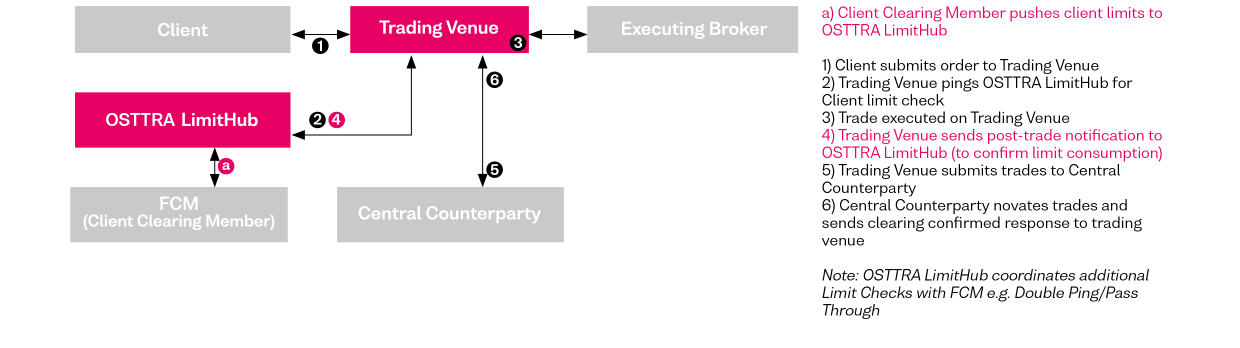
Feedback from FCMs highlights the indispensable role of limit checks in the successful implementation of agency clearing models. The OSTTRA LimitHub solution offers diverse models to accommodate various underlying activities and product types. For electronic venues, it supports both a Ping model, where orders are routed to OSTTRA LimitHub for verification and an approval or rejection message is returned based on limits set by the FCM (Exhibit 1), and a Push model.

Exhibit 1 – Request for Quote (RFQ) Trading Venues


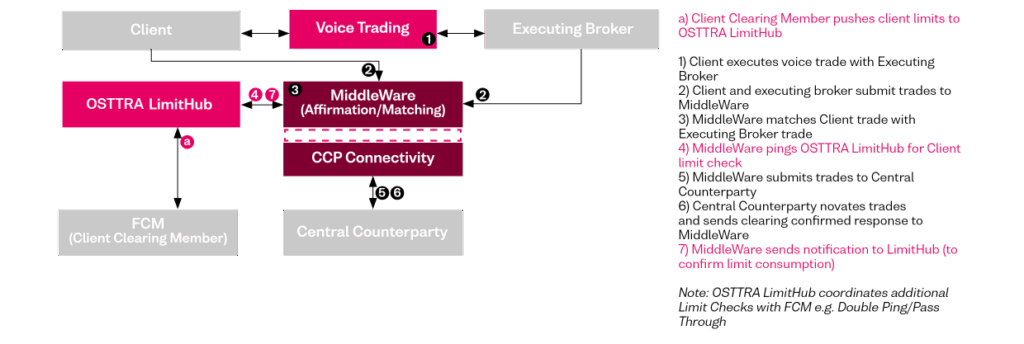
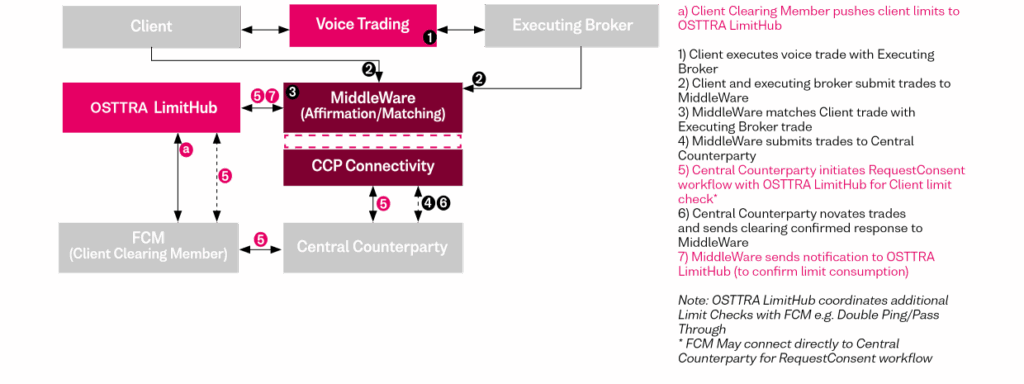
In the Push model, particularly where a venue operates a Central Limit Order Book (CLOB), OSTTRA LimitHub proactively pushes limits to the venue for local storage, ensuring minimal latency. Furthermore, the service will support offvenue executed transactions through post trade pre-cleared workflows, enabling middleware to connect directly for limit checks (Exhibit 2) or CCPs to perform request consent workflows with clearing brokers (Exhibit 3). OSTTRA LimitHub for US Treasuries is currently in development with UAT access planned for completion by the end of summer 2025. Rollout is expected by early 2026, at which point client onboarding will start. The product will encompass both cash and repo transactions under the US Treasury clearing mandate. Although the mandate has been delayed until June 2027, industry participants are unified in their commitment to proactive preparation.

Exhibit 2 – Middleware performs FCM request consent


Exhibit 3 – CCP performs FCM request consent 


A unified view

Together, OSTTRA MarkitWire for Repo and OSTTRA LimitHub will provide the following capabilities:

OSTTRA MarkitWire for Repo:

  1. Cleared and uncleared repo support
  2. Trade affirmation and confirmation
  3. Lifecycle event management
  4. OSTTRA LimitHub connectivity
  5. Clearing submission and status view

OSTTRA LimitHub for US Treasuries & Repo:

  1. Pre-trade limit monitoring and management
  2. What-if credit checks
  3. Bunched order allocations
  4. Post-trade limit monitoring and management

To address anticipated fragmentation within the repo market (non-cleared and cleared including sponsored and agency), OSTTRA MarkitWire Repo and LimitHub offer services that acknowledge the wider market’s specific characteristics. These services will provide users with a comprehensive, unified view of all orders, trades, and clearing statuses across their entire network, encompassing both bilateral and CCP-cleared transactions. By integrating diverse data sources, firms gain a holistic perspective on activity involving clients, counterparties, and clearing houses. Recognising that no single service meets all client needs, the true value lies in the synergy of these integrated applications.

While central clearing of US Treasury repo has been in place for many years, the evolution of different clearing models remains an ongoing process. Rules and accounting treatments that will govern these models are in the final stages of approval and are expected to significantly shape market participant behaviour and infrastructure development.

As the industry adopts services that were initially developed for bilateral repo and OTC derivatives, the question remains whether the cleared repo market will also come to look like the cleared OTC derivatives market. Such convergence could present a range of new product opportunities that drive standardisation in both trading and post-trade processes. One potential outcome is greater operational efficiency which alleviates burdens for dealers and clients. This may represent a positive, albeit unintended, consequence of the new regulation.

Robust middleware and limit checking functionalities are essential for the success of agency models in global government bond repo markets. Whether mandated for clearing in the US or voluntarily cleared elsewhere, these services ensure strong operational integrity and risk management. Their effectiveness will be the ultimate measure of success in this rapidly developing area.

For more information, contact info@osttra.com

Could Repo Compression Work for the Industry?

Derivatives compression at OSTTRA is a global success story but can it be applied successfully to repo? Over the last 25 years, we have reduced the derivatives notional exposure of dealers by trillions of dollars, reducing systemic risk and creating balance sheet savings for participants. New incentives for bank risk reduction now are on the horizon: the Basel III Endgame, Basel Committee proposals on calculating G-SIB scores daily instead of annually, T+1 settlement and even climate change require that banks evaluate their options for further balance sheet savings. A fair question being asked is, could compression apply to repo markets, how would it work and what could it save?

Conceptually, repo compression is an attractive idea. By reducing the notional exposure of positions on banks’ balance sheets, banks will naturally save on RWA, G-SIB and Leverage Ratio costs tied to credit exposure and gross assets and liabilities. A lower requirement for balance sheet on the repo desk could make banks more competitive or give them a stronger internal argument when they need an allocation. In technology and risk, fewer positions mean less calculations, which means fewer opportunities for error and lower cloud computing costs. Regulators may also find compression attractive, since lower notionals mean less systemic risk from less interconnectivity between leveraged institutions.

OSTTRA conducts portfolio compression runs for cleared and uncleared interest rate swaps, cross-currency swaps, credit default swaps, FX forwards and commodity swaps. Given the economic similarities of these products to secured financing, it could make sense that compression could apply to repo also. But before jumping in, there are some facts to consider.


What would repo compression require?

The derivatives market supports multiple conditions that must also be met for the repo market to benefit from a compression service. These include:


How much could be compressed in repo?

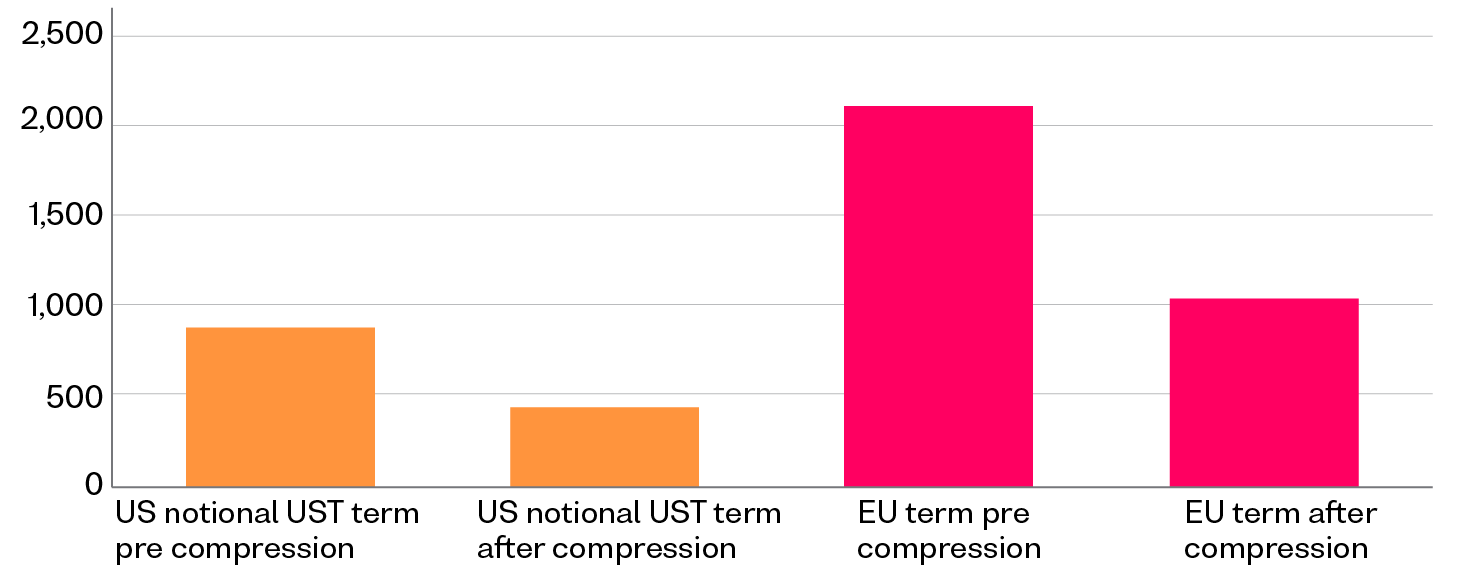
Since repo compression relies on transactions that are outstanding for a period of time, the portion of repo that would most likely benefit are term trades over 30 days. In the US, the percent of US Treasury (UST) term transactions outstanding on the books of primary dealers in March 2024 was $861 billion, $592 billion of which was in reverse repo and $270 billion was in repo, according to Federal Reserve Primary Dealer data.¹ This was 26% of the reverse repo total and 12% of the repo total. There is also an unknown portion of the $1.7 trillion in UST reverse repo and $2 trillion in repo that is booked overnight or under 30-day term but is held for a long duration; this could be considered term if both counterparties agreed to change the formal contractual obligation. Primary dealers form the type of concentrated market that benefits from compression.

In Europe, EUR 2.1 trillion of the EUR 10.8 trillion in both reverse repo and repo volumes were term over 30 days, according to ICMA’s repo survey conducted in June 2023.² There was another EUR 6.7 trillion in under 30-day volume that could potentially be recategorised as term if compression were a service. On the downside, the ICMA survey captured 62 entities. Depending on the distribution of the volumes, this may be too large a number for viable compression and may reduce the amount of available assets.

In derivatives markets, initial compression exercises have reduced notional values by 50%-80%, depending on trades and currencies. If even 50% of UST repo trades with over 30 days of term at primary dealers in the US and 50% of European term volume over 30 days were reduced, that would take away 9.5% of total UST notional volume and 9.7% of total European notional. Removing $431 billion and EU 1.05 trillion of balance sheet heavy, low margin transactions could be meaningful when looked at through the lens of balance sheet capacity (see Exhibit 1).

Exhibit 1: Reduction of notional value from potential repo compression (Term trades > 30 days)


Source: Finadium

Avoiding physical settlement: an opportunity for DLT?

The market would also need to solve the question of how collateral and cash would move to settle the results of a compression exercise. Derivatives are easy in this respect: they are paper agreements that can be torn up and replaced with a smaller set of contracts by counterparty. Repo on the other hand requires that custodians and triparty agents engage to effectuate the movement of cash and collateral for both practical and contractual reasons. Any compression effort that ignores physical settlement will not get far.

OSTTRA has seen this challenge before in other markets with physical settlement. Compressing a portfolio of short dated oil contracts seems like a good idea until there is an oil tanker in the ocean on its way to a port. Likewise, metal or commodity futures with physical delivery elements present challenges for compression.

In repo and collateral, this condition gives rise to the idea that incorporating Distributed Ledger Technology (DLT) could make repo compression viable on a broad scale by removing settlement friction. A digitised ISIN could be used as the representation of the asset or cash while keeping the actual securities or cash immobilised at a custodian. A compression service could then direct the registry of the ISIN to make changes to the digital ledger; a trade registry or database that needs to be updated is much easier for compression to direct than asset transfers.

A similar model could be applied to triparty although given the number of triparty agents in the market, compression could turn into a series of smaller exercises that miss liquidity pools. It could be that attempting compression by triparty agent would lose the concentration of market participants or assets that is a prerequisite for a successful service.


OSTTRA is in the repo market already – should compression be next?

OSTTRA already has services that support post-trade repo processing, including the automation of affirmation and confirmation, lifecycle event management and allocation processing via OSTTRA MarkitWire. By creating a legally confirmed record, OSTTRA helps meet growing regulatory demands to increase settlement efficiency, minimising trade breaks due to a consistent data model and reducing trade confirmation processing times from days to minutes. In addition, the OSTTRA reconciliation service triResolve ensures the accuracy of repo portfolios on a multilateral basis, with streamlined exception management processes.

The next step for analysis will be the involvement of large dealers. While an initial review of data suggests that term repo trades reported over 30-days are a large enough market to make an impact, only dealers have the information on their books to confirm the hypothesis. Further, dealers can identify what percent of their overnight of under 30-day repo transactions are term in disguise by virtue of informal agreements or evergreen contracts.

If enough dealers are interested and there is a concentrated, two-sided market of size with adequate term, OSTTRA would continue the conversation. Repo could be the next opportunity in portfolio compression. We invite the market to come talk with us about the possibilities.

This article was originally published by Finadium


¹ Primary Dealer Statistics, Federal Reserve Bank of New York, available at https://www.newyorkfed.org/markets/counterparties/primary-dealers-statistics
² “European Repo Market Survey No. 45,” ICMA, December 2023, available at https://issuu.com/icma/docs/icma-repo-survey-december-2023/4?ff&experiment=new-bff-dynamic

Services